Woodland Christmas Raccoon: A Designer's Review
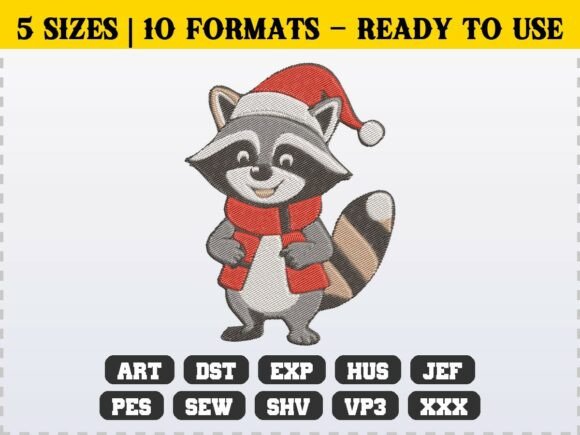
As an embroidery designer who has stitched out countless holiday motifs for both personal joy and commercial client work, I approach every new machine embroidery design with a critical eye. We have all downloaded files that look perfect on screen but turn into thread nests or lose their charm once hooped. When evaluating the Woodland Christmas Raccoon Embroidery, my primary focus is not just on its undeniable cuteness, but on its structural integrity and marketability. This design features a mischievous raccoon dressed for the festive season, striking a balance between woodland whimsy and traditional holiday cheer. From a professional standpoint, this specific aesthetic fills a crucial niche for makers who want to offer something alternative to the standard reindeer or snowman tropes.
First Impressions and Visual Personality
The immediate strength of this embroidery file lies in its character expression. In machine embroidery, capturing personality is difficult; too few stitches and the face looks blank, too many and it becomes muddy. This design appears to utilize a smart combination of satin stitch for defining facial features and fill stitch for the body and clothing. This mix is essential for maintaining visual clarity without creating a bulletproof patch of thread that distorts lighter fabrics. The "mischievous" descriptor in the product details suggests dynamic posing rather than a static portrait, which adds movement and life to the final finished product. For an Etsy seller or boutique owner, this visual personality is what stops the scroll. It evokes a cozy, storybook mood that pairs exceptionally well with natural fibers and rustic holiday decor themes.
Real-World Application: Stitching for Retail
To truly judge this design, I mentally placed it into a current production scenario: creating a line of holiday sweatshirts and matching tote bags for a local craft fair. When planning sweatshirt embroidery, the weight of the design matters immensely. Fleece and French terry are forgiving, but they can swallow fine details. The Woodland Christmas Raccoon Embroidery seems robust enough to handle the texture of fleece, provided you use adequate stabilizer. I would recommend a medium-weight cutaway for knit apparel to prevent puckering around the dense areas of the raccoon’s costume.
For a tote bag design, the considerations shift. Canvas is stable, but the design needs to hold its own against a utilitarian background. Here, the festive elements of the raccoon’s outfit provide necessary contrast. If you are a small shop product creator, this versatility is key. You could stitch this design on a cream canvas bag using classic red and green thread colors, or opt for a monochromatic tone-on-tone look for a more modern, subtle aesthetic. The ability to adapt the color palette without losing the design's recognizability increases its value as a commercial asset. Furthermore, for those creating personalized gift items like baby bibs or nursery pillows, the woodland theme bridges the gap between seasonal and evergreen, allowing customers to justify the purchase even after December 25th.
Navigating Fabric Challenges and Hoop Sizes
While the design is charming, practical application requires caution regarding where you place it. Not every fabric is a suitable canvas for detailed animal portraits. I advise against using this specific holiday embroidery on highly textured surfaces like terry cloth towels or thick cable knits unless you are using a water-soluble topping. Without a topping, the intricate details of the raccoon’s face and festive attire will sink into the fabric pile, resulting in a loss of definition that diminishes the professional quality of your work.
Stretchy performance fabrics are another danger zone. Unless you are experienced with high-tension stabilization, the stitch density required for the raccoon’s shading may cause tunneling on lightweight polyester blends. Always verify the available hoop size options before purchasing. A design scaled down too small to fit a 4x4 hoop may lose the delicate running stitches that define the mischievous expression. Conversely, scaling it up significantly for a jacket back might expose gaps in the fill stitches if the digitizer did not account for expansion. As a rule for any custom apparel project, respect the digitizer’s intended size range to maintain stitch integrity.
Commercial Viability and Brand Consistency
For creative entrepreneurs, the question is always: Will this sell? The Woodland Christmas Raccoon Embroidery possesses strong giftability. It appeals to the growing demographic of nature-loving families and cottagecore enthusiasts. However, brand consistency is vital. If your shop specializes in minimalist, typographic designs, this illustrative piece might feel out of place. But if your brand focuses on handmade warmth, nursery decor, or quirky holiday gifts, this design reinforces your identity.
When listing this as part of your inventory, presentation is everything. Do not rely solely on digital previews. Customers trust sellers who show real stitch-outs. Create a printable mockup or photograph a sample on actual merchandise to demonstrate how the thread sheen interacts with the fabric. This transparency builds buyer engagement and reduces returns. Additionally, consider the longevity of the item. Because this is a character-driven design, ensure your stitching is durable enough for washing, especially if applied to children’s items or kitchen textiles. Proper underlay and tension adjustments are non-negotiable for products destined for frequent use.
Essential Pre-Stitch Checklist for Makers
Before you commit this design to a final product or list it in your shop, run through this practical evaluation process. These steps separate hobbyists from professionals:
- Verify Licensing: Before selling finished items or using the design in commercial embroidery, confirm the specific license terms included with the file. Never assume commercial rights are granted.
- Test on Scrap Fabric: Always stitch a test run on the exact fabric you intend to use for the final project. Check for registration issues between the outline and fill areas.
- Check Thread Contrast: View the design in black and white within your software. If the values are too similar, the details will vanish on darker fabrics. Adjust thread colors to ensure the raccoon pops against the background.
- Inspect Small Details: Zoom in to check for tiny satin columns or isolated stitches that might break during production. Clean up any stray nodes in your editing software if necessary.
- Confirm Stabilizer Pairing: Match your stabilizer to the fabric weight, not just the design density. A heavy design on light fabric needs different support than a light design on heavy fabric.
- Evaluate Washability: If making baby clothes or linens, wash and dry your test swatch. Ensure the design doesn't pucker or distort after laundering.
Final Thoughts on Design Assets
The Woodland Christmas Raccoon Embroidery represents a delightful intersection of seasonal tradition and playful character design. For the experienced maker, it offers a reliable foundation for creating unique holiday merchandise that stands out in a saturated market. Whether you are producing an embroidered patch for denim jackets, decorating a personalized stocking, or expanding your digital product catalog, success lies in respecting the technical requirements of the file. By approaching this design with a critical, practical mindset—testing thoroughly, choosing appropriate substrates, and presenting your work honestly—you transform a simple digital file into a tangible, high-value asset for your craft business. Remember, the most beautiful design in the world fails if it cannot survive the hoop; take the time to engineer your success before you hit start.