Witch Broom Options Embroidery: A Designer’s Honest Review
First Impressions: Whimsy Meets Practicality
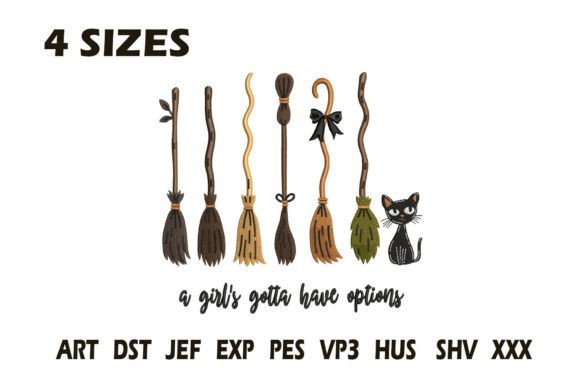
Opening the Witch Broom Options Embroidery file, I was struck by how instantly playful and approachable it feels. It’s not overly spooky, which makes it perfect for a broader Halloween audience—think kids' items, boutique apparel, or home decor that leans more toward festive than frightful. The broom design is stylized but recognizable, with clean lines and enough detail to make it visually engaging without being overwhelming. This is a machine embroidery design that feels versatile at first glance, and that’s always a good sign.
Real-Life Use: From Tote Bags to Toddler Hoodies
I tested Witch Broom Options Embroidery on a few different materials to get a sense of how it would translate in actual projects. Starting with a standard cotton tote bag, the design stitched cleanly with no distortion. The satin and fill stitches held up well, maintaining crisp edges and even coverage. I tried a lightweight sweatshirt next—medium-weight knit—and the embroidery held its shape without puckering when stretched. That’s a win for custom apparel and Etsy sellers looking to expand seasonal offerings.
When I moved to a thinner fabric like baby flannel, I noticed the need for a lightweight stabilizer to prevent the stitches from pulling the fabric. Still, the final embroidered patch looked charming on a baby onesie, and I could see this being a hit for personalized Halloween gifts. For hats and curved surfaces, I recommend using a smaller hoop if available, as the corners of the broom can catch slightly on uneven tension areas.
Design Performance Across Use Cases
Here’s how Witch Broom Options Embroidery performed in different scenarios:
- Tote Bags: Clean stitch-out, good scale, and easy placement.
- Sweatshirts: Slight density adjustment helped avoid stiffness without losing definition.
- Baby Clothes: Works well with stabilizer, adds a sweet seasonal touch.
- Hats/Caps: Best with smaller hoop sizes and flat placement options.
- Kitchen Towels: Looks great on linen or cotton, especially with contrasting thread.
- Personalized Gifts: Easy to resize and customize, great for boutique-style items.
- Digital Mockups: Translates well into printable mockups for Etsy or digital product previews.
Where to Be Cautious with This Design
While the Witch Broom Options Embroidery is versatile, it does have some limitations. On stretchy fabrics like jersey or spandex, the satin stitches can ripple slightly unless you use a cutaway stabilizer. Dark fabrics can also mute the design’s charm unless you carefully select contrasting thread colors. I noticed that on black cotton, the lighter thread didn’t pop as much as I’d hoped, so I’d suggest testing thread combinations before stitching a final product.
Also, if you’re working with small hoop sizes, be mindful of how the broom’s handle and bristles interact with the hoop edges. Some fine details may get compressed or distorted if not positioned carefully. For embroidered patches, ensure the design isn’t too dense in the bristle area, which could cause stiffness or cracking after repeated washes.
How It Elevates Your Finished Products
What I appreciate most about Witch Broom Options Embroidery is how it enhances the perceived value of handmade items. A simple tote bag or tea towel becomes something more when embroidered—it feels intentional, personal, and professionally finished. For Etsy sellers or small shop owners, this kind of design can help justify a price bump while still keeping production time reasonable.
From a branding perspective, it works well for seasonal collections. If you’re curating Halloween-themed bundles or holiday gifts, this embroidery file can serve as a unifying visual element across different product types—think matching patches on baby hats and tote bags for a cohesive look. It also adds a touch of whimsy that customers respond to, especially in gift items where charm and personality matter.
Practical Notes for Embroidery Designers
Before stitching out Witch Broom Options Embroidery for a client or product line, here are a few things I’d recommend checking:
- Test on scrap fabric—especially if you’re using a new material or color.
- Review thread color contrast—especially on dark or textured fabrics.
- Confirm hoop size—make sure the design fits within your machine’s capabilities.
- Check stitch density—adjust if needed for soft or stretchy materials.
- Inspect small details—like the tip of the broom or any fine lines that may not stitch cleanly.
- Test in black and white mockups—to see how it looks in different contexts.
- Compare light and dark fabric backgrounds—this design can look very different depending on the base color.
- Use the right stabilizer—lightweight for soft fabrics, cutaway for stretchy ones.
- Verify licensing—especially if you’re selling finished items or digital embroidery files.
Final Thoughts: A Seasonal Staple with Real Appeal
Witch Broom Options Embroidery might not be the most complex design in your collection, but sometimes simplicity is what makes a design work across so many applications. It’s a solid choice for Halloween-themed products that need a touch of charm without going full horror-core. Whether you’re stitching up custom apparel, creating handmade gifts, or building out a seasonal product line, this embroidery file delivers both visual appeal and practical usability.
For small business owners and creative entrepreneurs, it’s a reliable asset that can be used across multiple product types. And for designers, that kind of flexibility is invaluable—especially when preparing for seasonal rushes or crafting digital design bundles for sale.